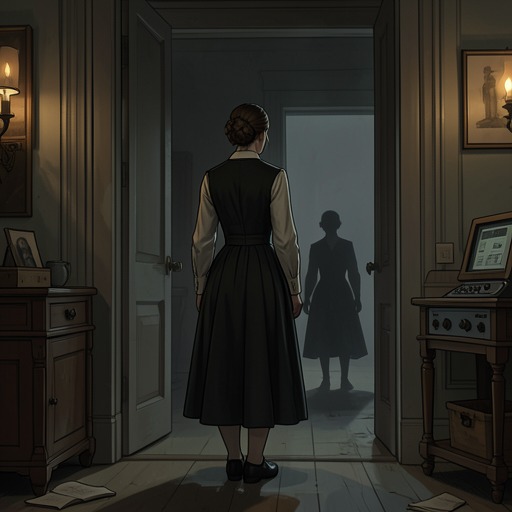
Nella delays sharing the evidence
The Other Black GirlNella Rogers delays sharing the photographs on her phone at the moment Malaika urges her to send them to a presumed ally. The pause does not amount to a refusal: Nella agrees that the person texting her has been on her side, and that sending the images is the right thing to do. But with a train arriving, her thoughts spinning, and Malaika reaching to take the phone, Nella insists that she will act later and on her own terms. The exchange turns a practical decision about evidence into a test of trust, urgency, and personal control.
The Decision at the Station
Nella and Malaika are at a station in Brooklyn as a train approaches. Nella has been sitting very still and breathing slowly while trying to make sense of what she feels. She suspects that something rotten has been present inside Wagner Books from the beginning, and her thoughts widen toward the possibility that everyone knew. She wonders how Richard Wagner could otherwise have accumulated such extensive notes. These are Nella’s suspicions, not confirmed findings, but they give the photographs she carries an urgent significance: they may help her make contact with someone who can be trusted.
Malaika frames the proposed next step as a continuation of an existing connection. Whoever owns the phone that has been contacting Nella, she says, has presumably supported her since day one; she asks whether Nella will send the photographs to that person. Nella nods. That assent matters: she has not rejected the contact or the prospect of sharing what she has. Malaika also acknowledges the risk in how the decision may look, while arguing that it remains the right thing to do. The exchange establishes a clear intention, even as Nella postpones its execution.
Urgency and Resistance
After Nella begins to stand, Malaika points to the phone that Nella is clutching against her torso and asks whether she wants to send the photographs right then. Nella answers that she would rather handle it once she gets home; the train is coming. Her reason is immediate and concrete. The approach of the train sets a clock on the conversation, while the phone stays physically in Nella’s grasp. She is not ready to turn agreement into action in the few moments before departure.
Malaika counters that they have plenty of time and offers to send the material for Nella because she must be frightened. Then she reaches for the phone. The attempt shifts their exchange from encouragement to unwanted intervention: Malaika treats Nella’s hesitation as a problem she can solve, but Nella responds with her arm and a withering look. The evidence on the phone may call for action, yet this moment also makes clear that acting on it belongs to Nella. The narration does not establish that Malaika intends harm; it shows that even a well-meant offer crosses a boundary when it disregards Nella’s stated choice.
A Boundary Within Friendship
Nella makes that boundary explicit. She tells Malaika that she will handle it herself and repeats that she wants to wait until she is home. She names her condition rather than arguing about whether the photographs should be sent: her head is spinning, she is tired, and she would prefer to talk about something else for the rest of the trip. Her request to drop the subject is a bid for space at a time when the wider crisis has already made it difficult for her to think.
The red-and-black scarf Hazel gave Nella pulls uncomfortably at her eyebrows as she stands. In the scene, that physical discomfort accompanies, but does not explain, her refusal to hand over the phone. Nella’s grip on it and her response to Malaika’s reaching gesture make the distinction tangible: she may accept her friend’s counsel without surrendering control of the next move. Malaika looks hurt and apologizes, beginning to explain that she had only figured something; the arriving train rattles too loudly for Nella to hear the rest. The interruption leaves Malaika’s unfinished thought and the tension between them unresolved.
Delay, Not Abandonment
The scene closes without confirming that Nella sends the photographs. A slow-approaching train is about to carry her away from Clinton Hill; she expects to transfer to another train and travel to a less attractive part of Brooklyn. The journey gives her an immediate reason to postpone the decision, but the exchange supplies no later outcome. The photographs remain on her phone, and the intended recipient remains unidentified in this moment.
That open ending preserves the difference between commitment and timing. Nella accepts Malaika’s central point—that she should send the evidence—while rejecting the demand that she do it at once, or let someone else do it for her. In a larger situation shaped by suspicion and incomplete knowledge, the delay holds suspense around what the images might set in motion. At the level of character, it also marks a modest but firm act of self-direction: Nella does not abandon the next step; she claims the right to choose when she is ready to take it.